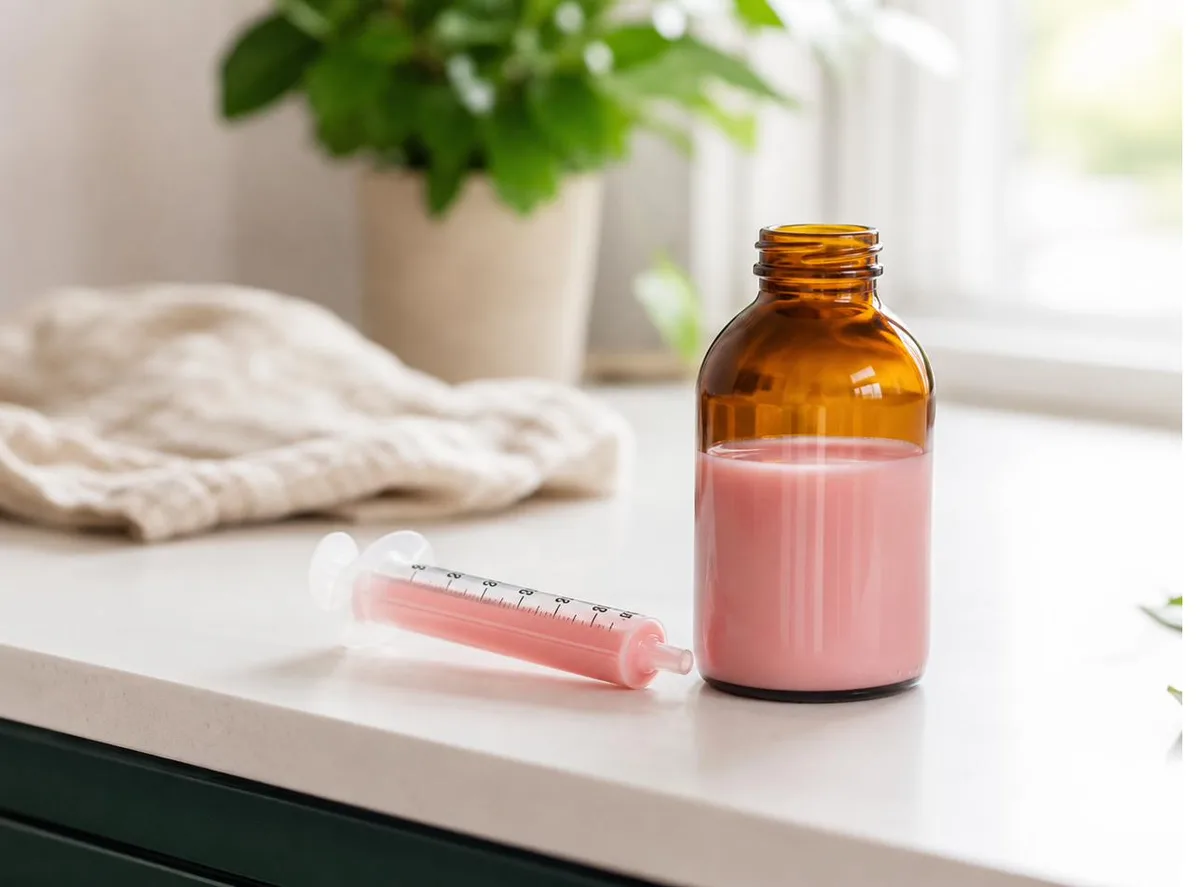
When a child on the spectrum cannot take a medication because of its taste, texture, colour, or form, the problem is the format, not the child. Mediglen reworks prescribed medications into forms that fit sensory needs: flavoured liquids, dissolvable tablets, sprinkle capsules, and dye-free, allergen-aware formulations. Made in Coquitlam, with parents and prescribers.
About 1 in 50 Canadian children and youth aged 1 to 17 has been diagnosed with autism spectrum disorder.1 For many of these families, the hardest part of a treatment plan is not the medication itself but getting it taken, every day, without a battle.
Research links autistic traits with measurable differences in taste perception and strong texture-driven food preferences.2 A tablet that an adult swallows without thinking can be genuinely intolerable: too bitter, too gritty, the wrong colour, or simply a pill that cannot be swallowed. Behavioural research shows that medication acceptance in children with autism can be built systematically, and that the form of the medication matters to that process.3
Restricted diets, dye sensitivities, and allergies narrow the options further. Many commercial products contain artificial colours, gluten or casein-derived excipients, or sweeteners a family is avoiding. And because routine and predictability matter, a medication that changes appearance or flavour between refills can undo weeks of progress.
Compounding lets a pharmacist rebuild a prescribed medication around the patient: the same active ingredient your prescriber chose, in a form your child can actually take.4
That can mean turning a bitter tablet into a flavoured liquid with bitterness-masking agents, removing every artificial dye, leaving out gluten and casein-containing ingredients, or producing the exact in-between dose a titration plan calls for instead of splitting tablets.
It also means consistency. Mediglen documents each child's formula, flavour profile, and vehicle, and repeats it batch to batch, so the medication looks and tastes the same at every refill. Refills can be synchronized with the rest of the family's prescriptions so the routine never breaks.
Suspensions and solutions built with sweeteners and bitterness blockers, in the flavour your child accepts. The most common solution for children who cannot or will not swallow pills.
Medications prepared in soft gelatin-based chewable vehicles, flavoured to preference, for children who manage chewing better than swallowing or drinking.
Tablets that dissolve on the tongue, removing the swallowing step entirely while keeping a precise dose.
Capsules that open onto soft food, or pre-measured powder packets for larger doses, so medication joins a meal instead of interrupting it.
Formulations without artificial colours, and prepared without gluten or casein-containing excipients where required. Sugar-free vehicles available. Every ingredient lot is checked against your child's profile.
For the specific medications where skin absorption is established in the literature, a measured transdermal gel can replace an oral dose. We are direct about the evidence and review each request with your prescriber.
Therapy decisions always belong to your child's physician or nurse practitioner. Our job is the format. Prescriptions Mediglen is commonly asked to reformulate for patients with ASD include:
If a medication you are struggling with is not listed, ask. If a compounded format exists that is appropriate and supported by the evidence, we will propose it to your prescriber; if it is not, we will tell you that plainly.
Compounded medications are prepared for an individual patient on a prescription and are not Health Canada-approved manufactured products. Mediglen prepares non-sterile compounds under NAPRA standards and College of Pharmacists of BC requirements.
Yes. Compounded medications are prepared from a prescription written by your child's physician or nurse practitioner. If a current medication is not working in its commercial form, our pharmacists will propose formulation options your prescriber can approve.
Mediglen stocks a wide range of flavouring options, including dye-free flavours, plus sweeteners and bitterness-masking agents. Parents and, where possible, the child are involved in choosing, and the same flavour profile is repeated batch to batch so the medication stays predictable.
Yes. Formulations can be prepared without artificial dyes and without gluten or casein-containing excipients, and sugar-free vehicles are available. Tell us about every sensitivity and allergy at intake; it is checked against each ingredient lot.
Many private plans cover compounded prescriptions, and some preparations are eligible under BC PharmaCare. Mediglen verifies coverage and bills your plan directly before preparing the medication.
In most cases, yes. With the prescription and formulation details, Mediglen can prepare the same formula or work with your prescriber to refine it, so a pharmacy change does not mean starting over.
Most preparations are ready within 1 to 2 business days. Local delivery across the Tri-Cities is free, and refills can be synchronized so the routine never breaks.